The thinking behind 12 months, 12 ventures
Why Amvention’s venture-building ambition depends on founders with market knowledge, clear responsibilities, and a shared commitment to execution.
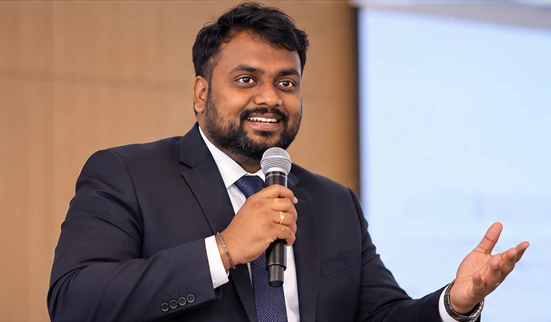
“12 months, 12 ventures” is an ambition I am working towards through Amvention. The phrase describes a pace of collaboration. It does not mean twelve businesses have already succeeded, or that a launch by itself proves a business is useful.
I want to work with people who understand a problem deeply and need the product and engineering capability to address it. A person close to a market may already know the customers, the buying process, and the everyday frustrations. Turning that understanding into a product is a different kind of work.
A partnership that started in engineering
My co-founder at Amvention, Amarnath Maddireddy, was my engineering classmate at KL University. We started D4Devs in Guntur during our second year and also created World Blood Organisation together.
That shared history matters to me. Building together involves decisions under uncertainty, routine follow-through, and conversations about what is not working. A partnership needs enough trust to have those conversations honestly.
Through Amvention, we want to bring product thinking, design, engineering, and execution to founders who bring experience in their own markets. Neither contribution is a substitute for the other.
Market knowledge needs to reach the product
A founder’s understanding should affect the details: who the first customer is, what their existing process looks like, which task is painful, and why they would change their habits. “There is a large market” is too broad to guide an engineering team.
The most useful starting point is a specific situation that can be described clearly. Who does what today? Where does the process break down? What would a better result look like? Those answers help establish the first version and keep it from becoming a collection of unrelated features.
IdeaWings grew through this kind of conversation
As part of this venture-building effort, I met Harindra and liked his commitment to startups. He came with an idea. We analysed it, and Harindra, Amarnath, and I decided to work on IdeaWings, a product focused on taking ideas towards MVPs.
The value of that conversation was the combination of perspectives. A productive partnership gives each person a real role in deciding what should be built and how the work moves forward.
It also needs clarity about responsibilities. Customer conversations, product decisions, engineering, operations, and commercial work all need owners. Calling everyone a co-founder does not automatically distribute the work.
A first version should settle a question
I think an MVP is most useful when it helps answer something specific. Will this workflow save time? Can a customer complete the task without our help? Is the problem important enough for someone to pay to solve it?
A product can be small and still be complete enough to test that question. Adding more features before finding an answer can make the first decision harder to see.
For the same reason, the venture-building model needs room to stop, narrow, or revise an idea. A calendar target should never make us continue an approach that customers are telling us to reconsider.
Judge the model by what lasts
The longer-term test is whether we can help build companies that people use, that have a workable commercial model, and that their founders remain committed to operating.
That is the work behind the ambition. Each venture needs its own customers, its own learning, and its own reasons to exist. The shared capability should help founders do that work better.